The languages I use across production full-stack systems, backend services and data-heavy applications.
- Primary
- TypeScript · JavaScript · SQL
- Also use
- Python · Java
- Applied in
- Purdue · Yansons · Diagrams-AI
>_ WARNING // MIRROR CHECK
Software engineer & AI developer — everything I build is meant to ship
I build software that takes the routine out of people's work. I think AI should handle the boring parts of a job — so I build the pipelines, APIs and interfaces that let it. Full-stack by trade, systems-minded by habit, AI-curious by default.
I'm Yash Tembhurnikar.
Lines of code that made it to prod:
Purdue · Yansons · production systems · AI projects
Distance traveled to ship better software:
Pune → Singapore → West Lafayette
Probability I’ll keep debugging until it works:
the other 0.1% just needs one more commit
Capabilities
Six areas of depth, applied across production systems.
The languages I use across production full-stack systems, backend services and data-heavy applications.
Production interfaces built around component architecture, state, accessibility and responsive behavior.
APIs, business workflows, authorization and data layers designed to behave predictably in production.
Relational and application storage spanning production databases, ORM-backed systems and client/cloud persistence.
Containerized applications, deployment pipelines and production delivery workflows.
The engineering principles underneath the stack: correctness, maintainability, access control and system behavior.
Selected work
Production software, AI tooling and ML systems where the interesting work lives behind the interface.
Solo project · containerized and deployment-ready
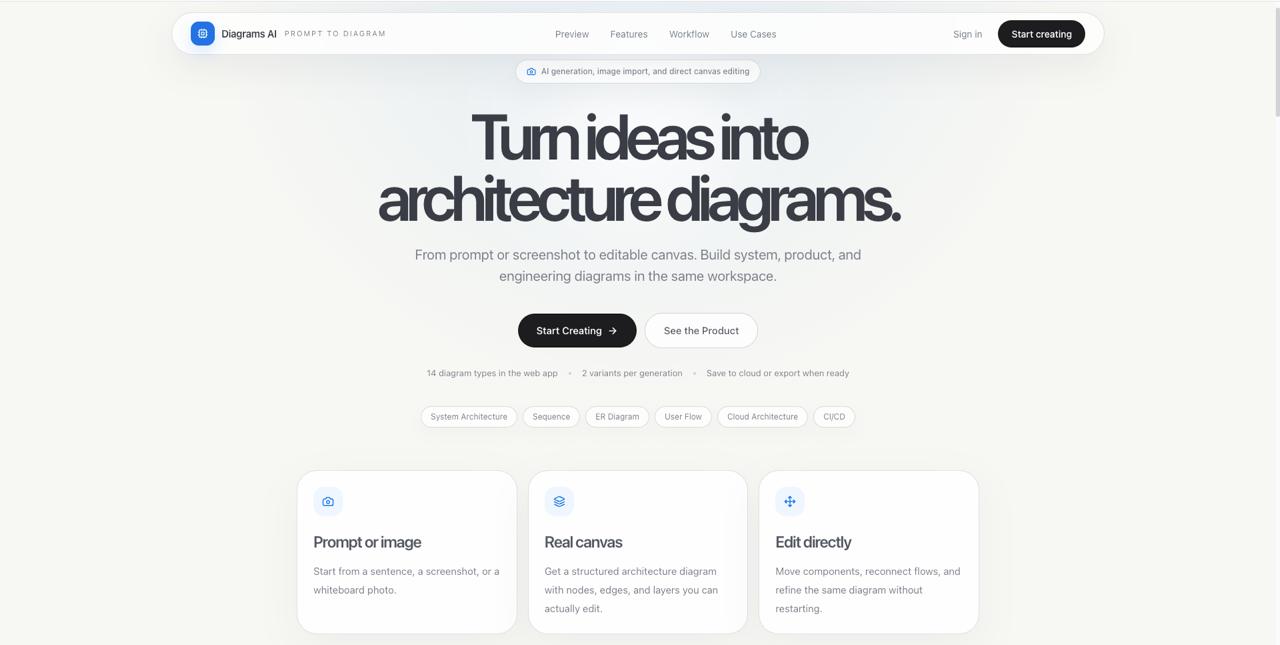
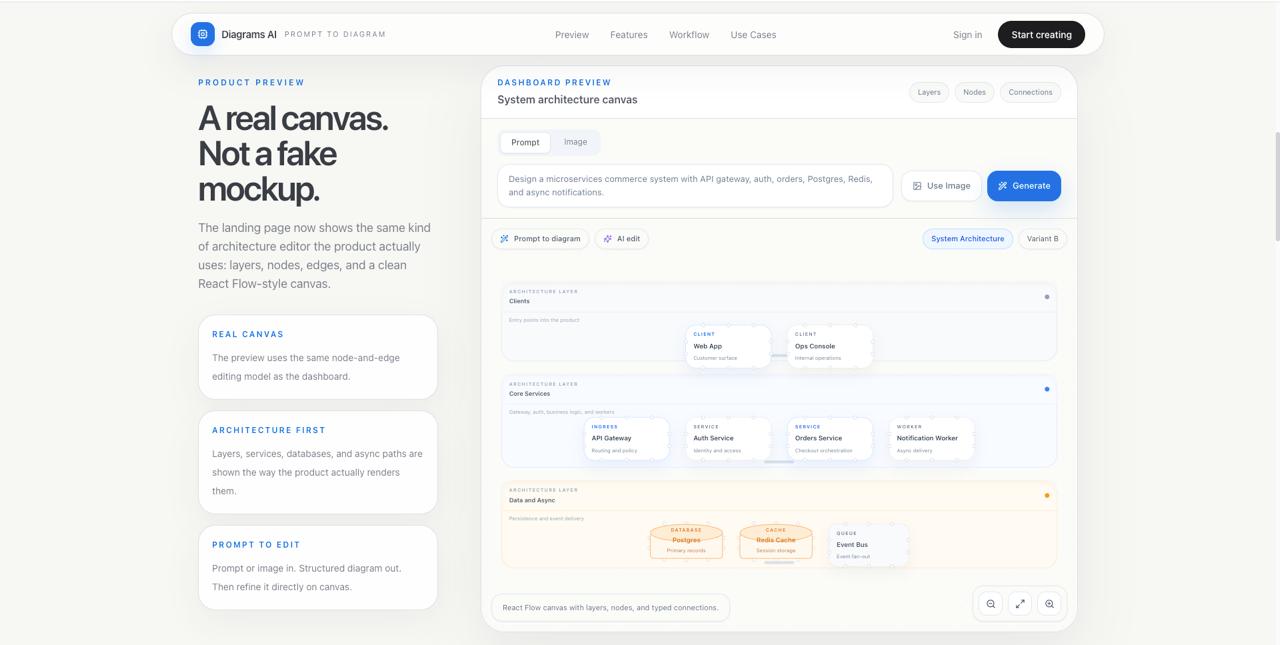
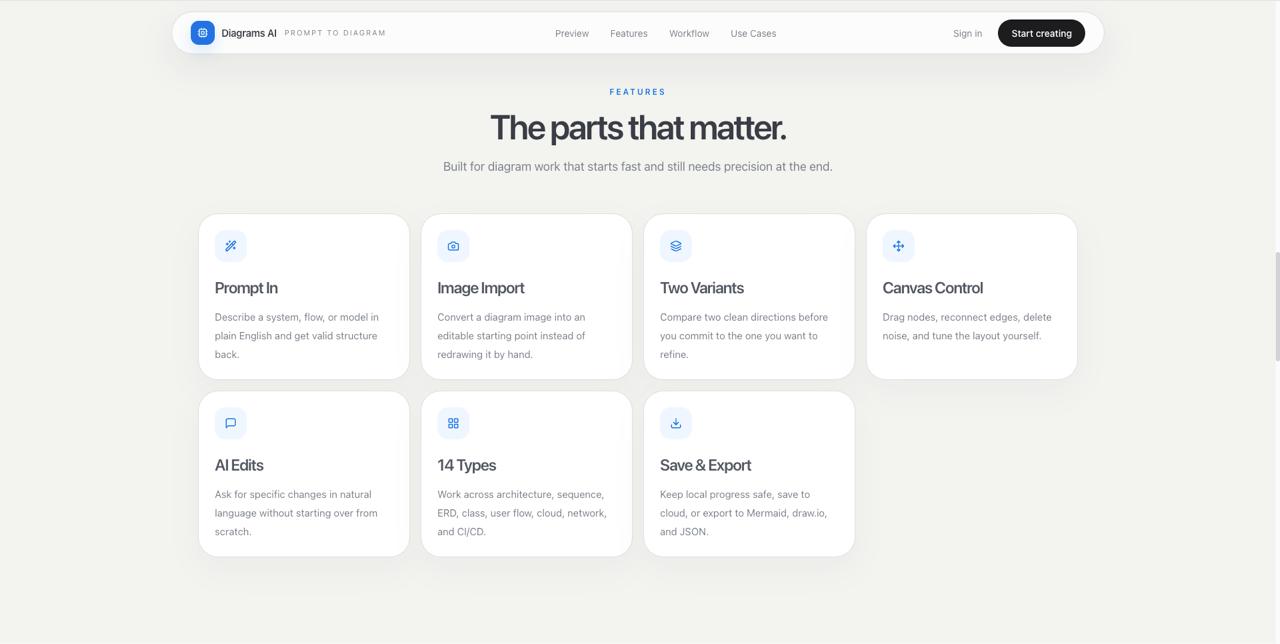
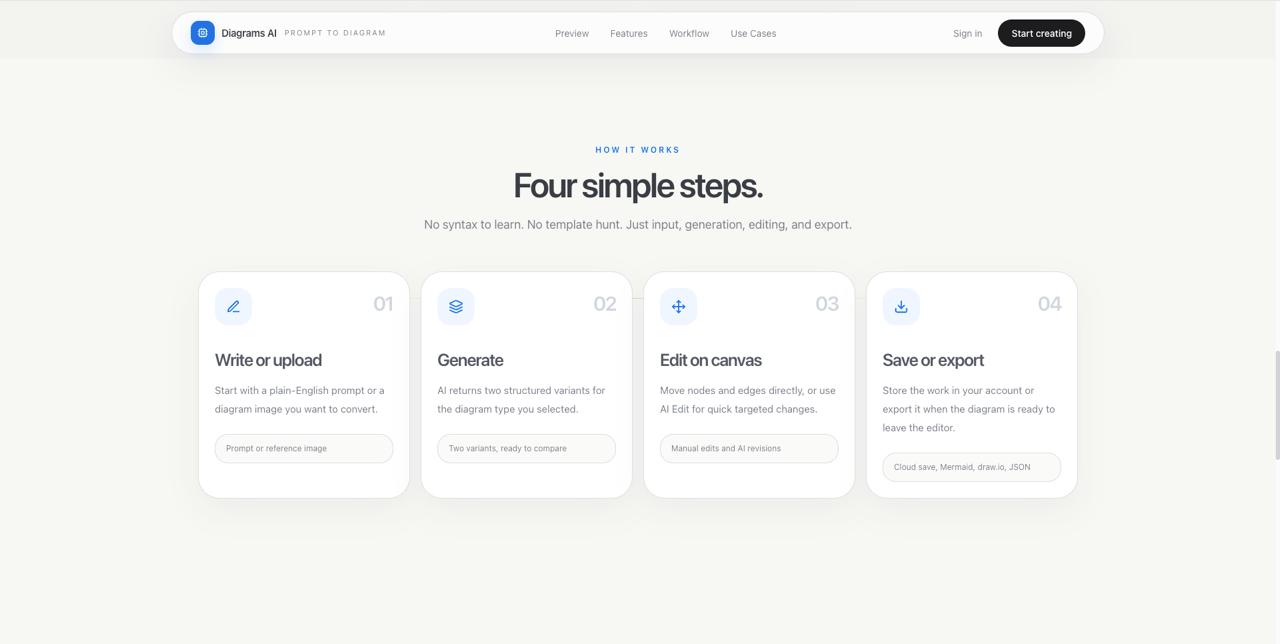
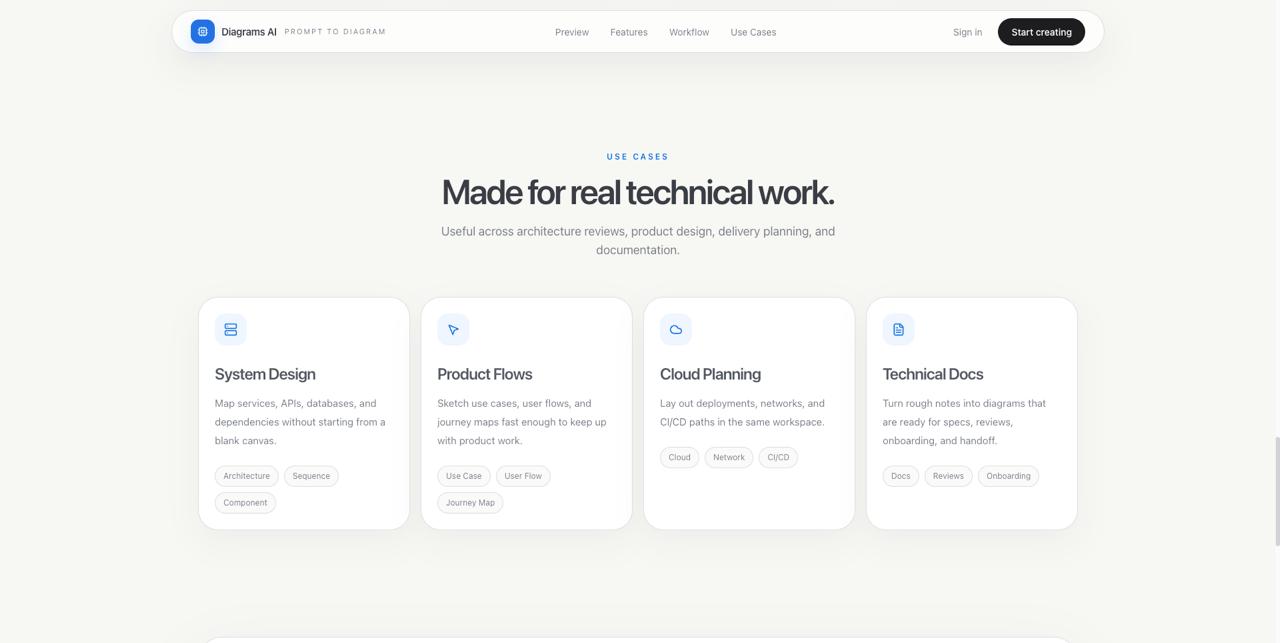
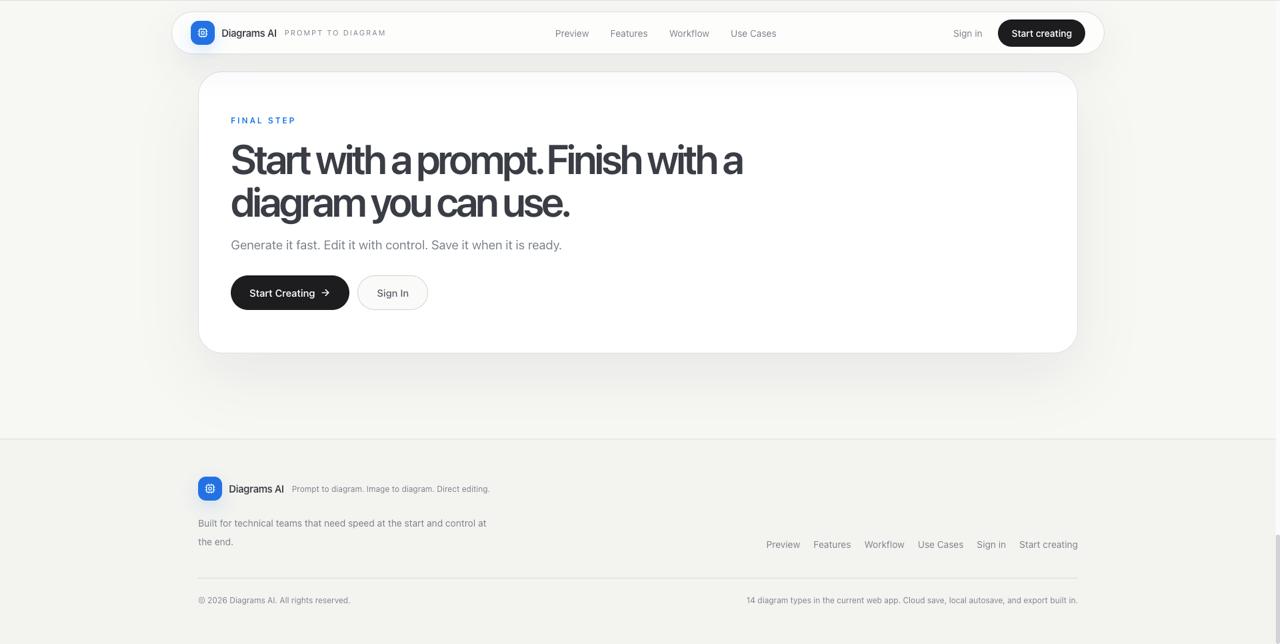
A full-stack AI platform that turns natural-language requirements into editable software and system-design diagrams. It supports 14 diagram types across UML, architecture, scalable systems, DevOps and product workflows. Gemini and GPT models generate structured output that is normalized into schema-validated JSON before specialized graph, sequence and architecture renderers display it.
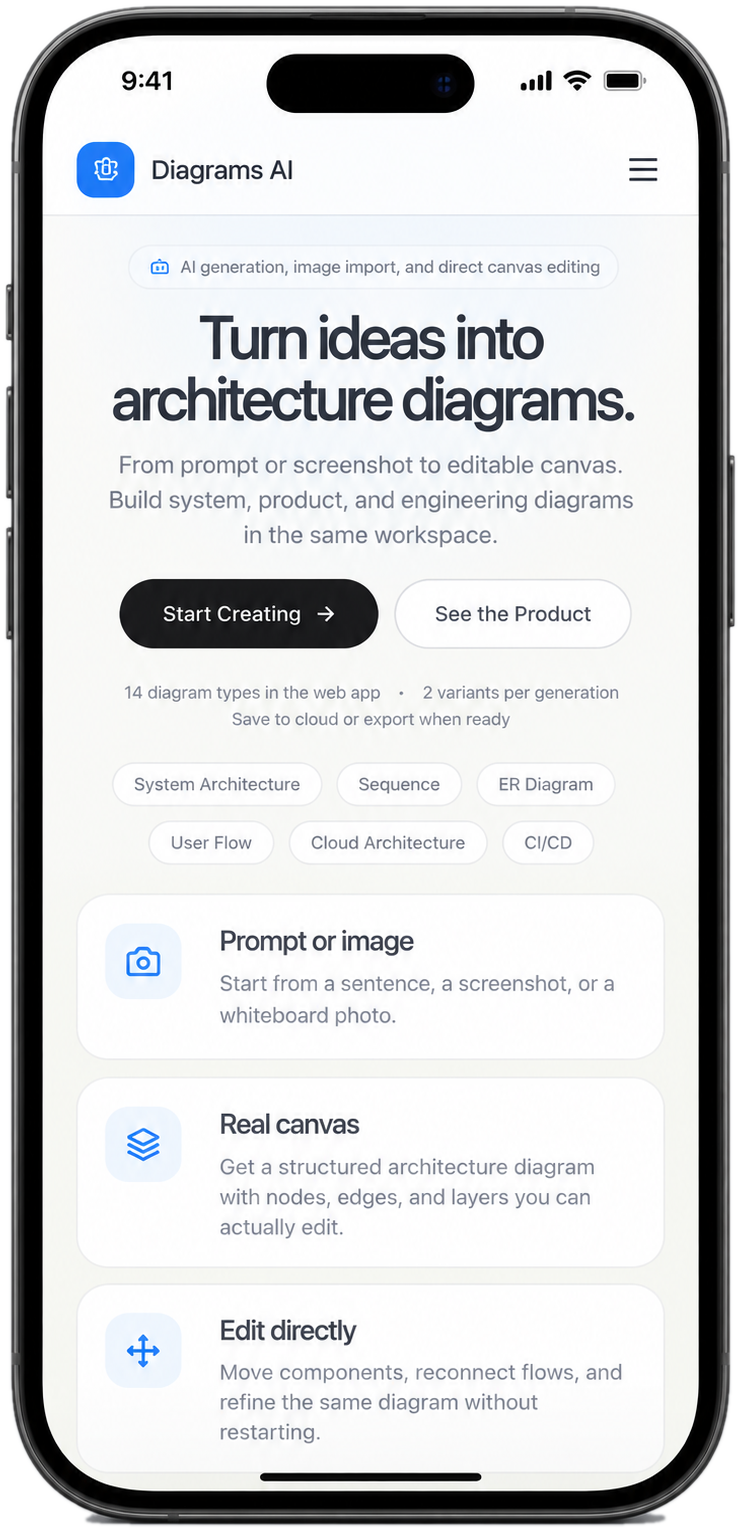
A solo full-stack AI platform that turns natural-language requirements into editable software and system-design diagrams — 14 UI-supported diagram types spanning System Architecture, Flowchart, Sequence, ER, Class, Component, Deployment, Data Flow, Use Case, User Flow, User Journey, Cloud Architecture, Network and CI/CD Pipeline diagrams.
Pipeline: a natural-language prompt goes through Gemini/GPT orchestration, comes back as a validated JSON intermediate representation, is rendered by a diagram-specific renderer onto an editable canvas, and persists locally or to the cloud before export. The backend is Python 3.11, FastAPI and Pydantic v2; the frontend is Next.js 14, TypeScript and React, with React Flow for graph-based diagrams. Three separate rendering approaches handle graph, sequence and architecture structures, since each has different layout rules.
Pydantic field and model validators catch malformed LLM output before it reaches the renderer — invalid edge references are dropped rather than failing the whole generation, and enum normalization absorbs schema drift between model versions. Gemini 2.0 Flash is the primary model with GPT as fallback, with exponential backoff on rate limits. Work is autosaved to IndexedDB and persisted to Firestore, and diagrams export as Mermaid (.mmd), draw.io XML or JSON IR. The app ships as a 3-service Docker Compose stack with service health checks.
In production at Yansons Engineering · Sole developer
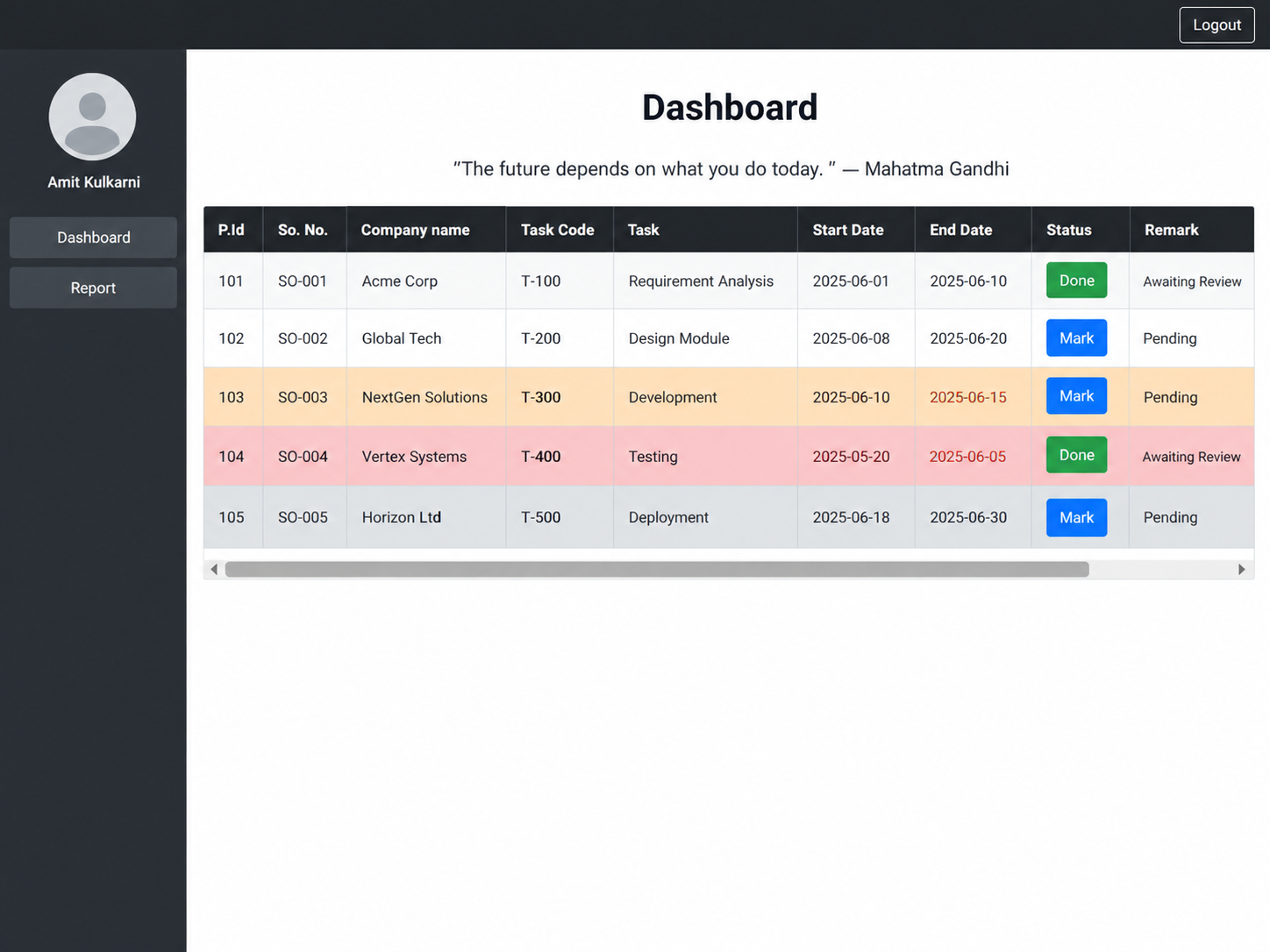
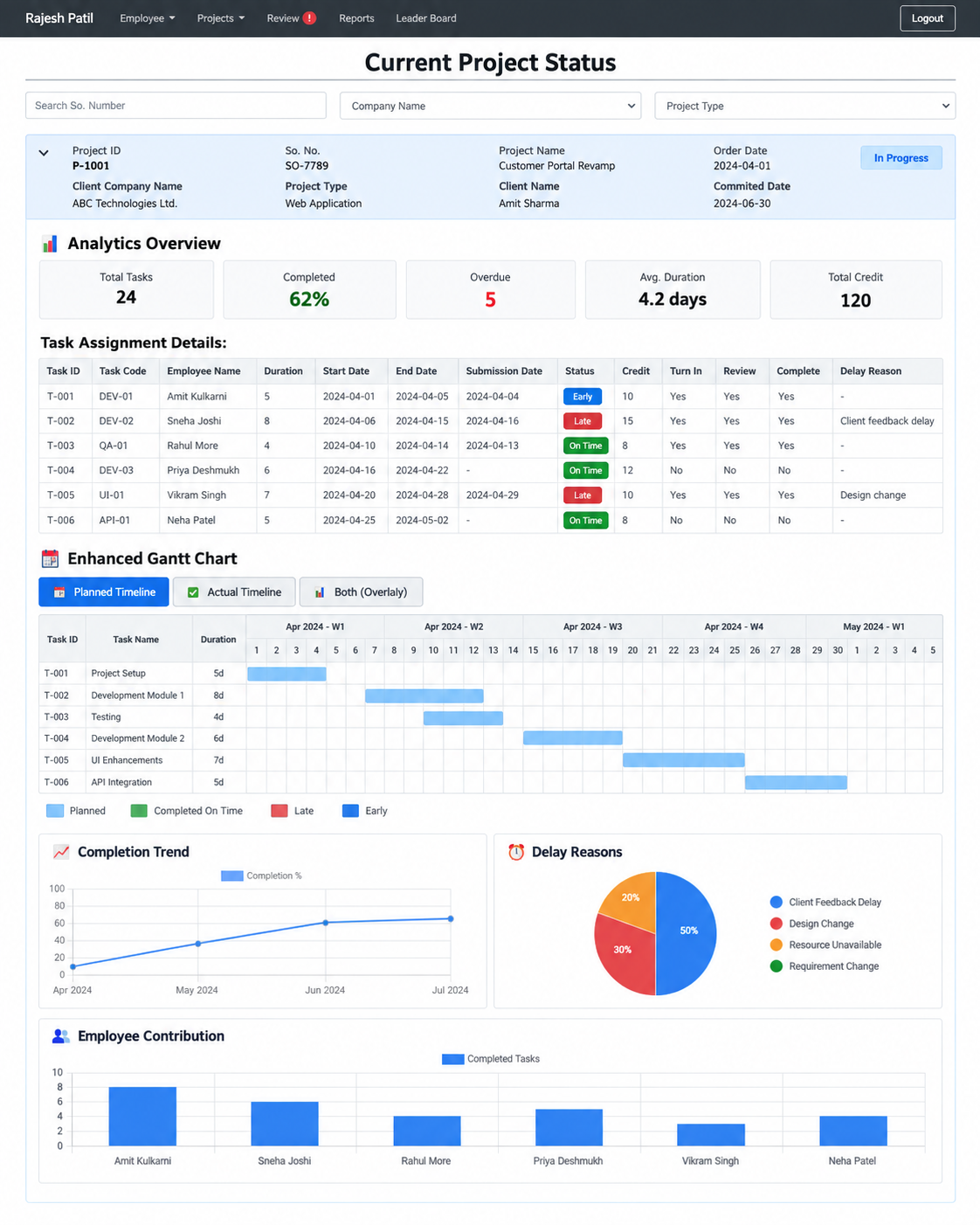
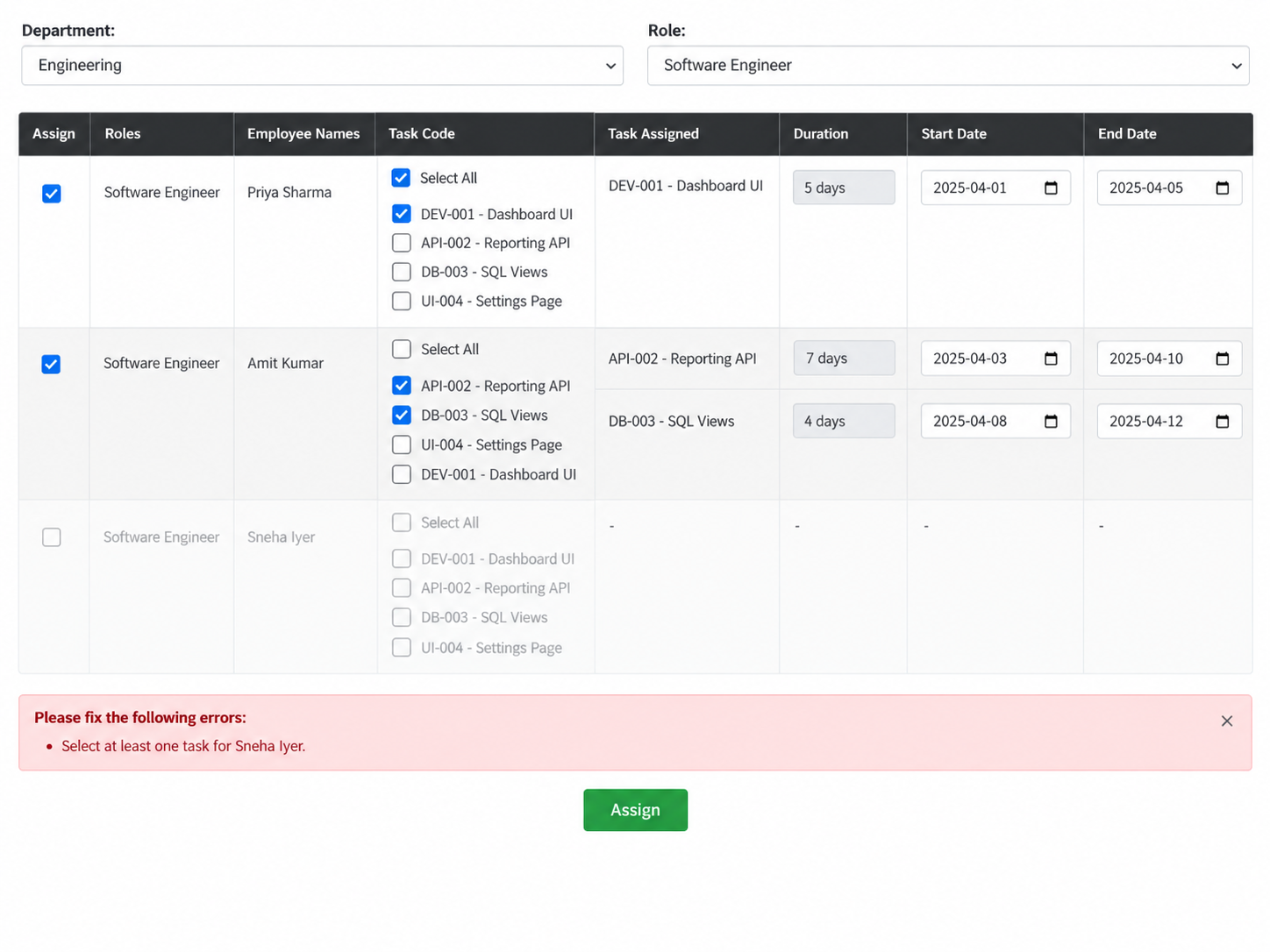
An internal project and employee-performance platform I designed and built from scratch as the sole developer. The system centralized project planning, task assignment, dependency tracking, submission and review workflows, performance scoring, reporting and management analytics across 8 departments — 40+ REST API routes and 8+ automated operational workflows, deployed on AWS EC2 and Amplify.
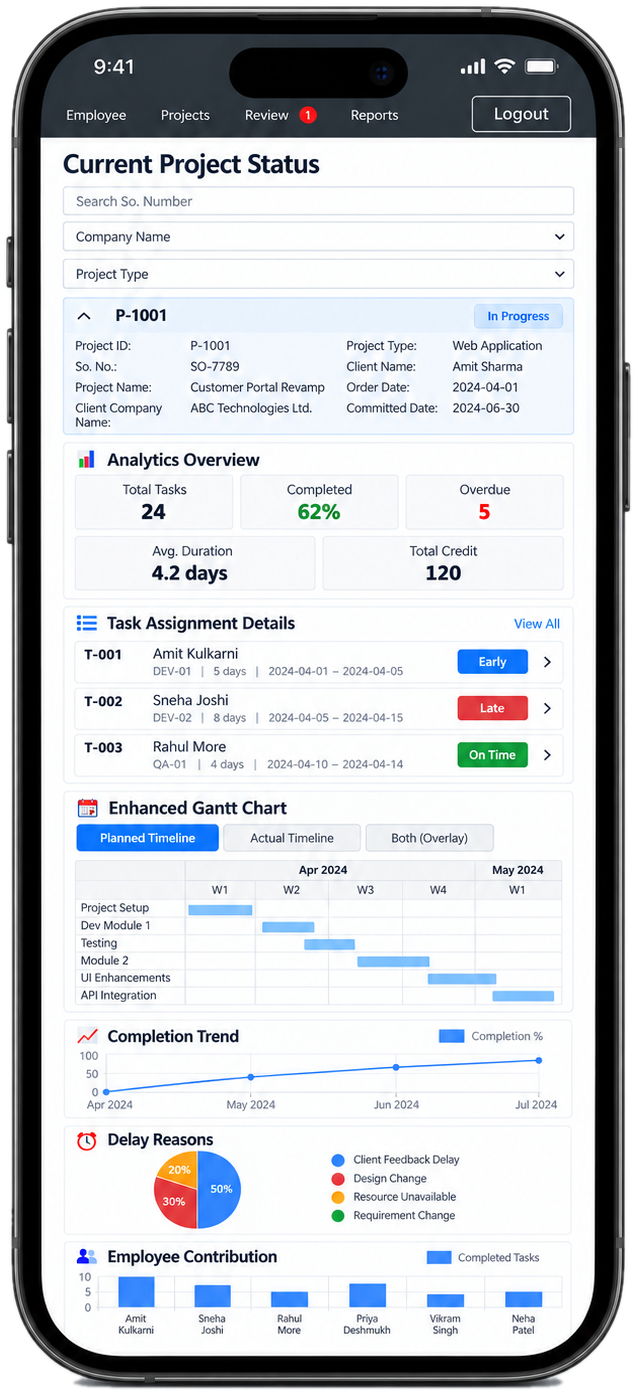
Management needed one system to replace fragmented spreadsheet-based tracking of employees, departments, projects, tasks, dependencies, deadlines, submissions, approvals, performance and reporting. I architected and built the entire platform from scratch as sole developer — React frontend, Node.js/Express backend, MySQL — translating an operational problem into a data model and workflow set with no prewritten technical spec.
Workflows cover employee/task assignment, dependency-based scheduling, submission and review, approval, performance/credit scoring, email notifications, OTP/password reset, reporting and stale-task cleanup — 40+ REST API routes and 8+ automated operational workflows in total. An analytics dashboard gives managers project-level task data, planned-vs-actual Gantt-style timelines, completion metrics, overdue-task and delay-reason analysis, employee contribution and total credit/performance views.
Deployment: the React frontend runs on AWS Amplify, the Node/Express API on AWS EC2, with a MySQL database and a custom domain. Deployed internally across 8 departments, with 80–100 total production tasks tracked in the system over roughly 18 months of development and maintenance.
Solo project · research prototype, not a diagnostic tool
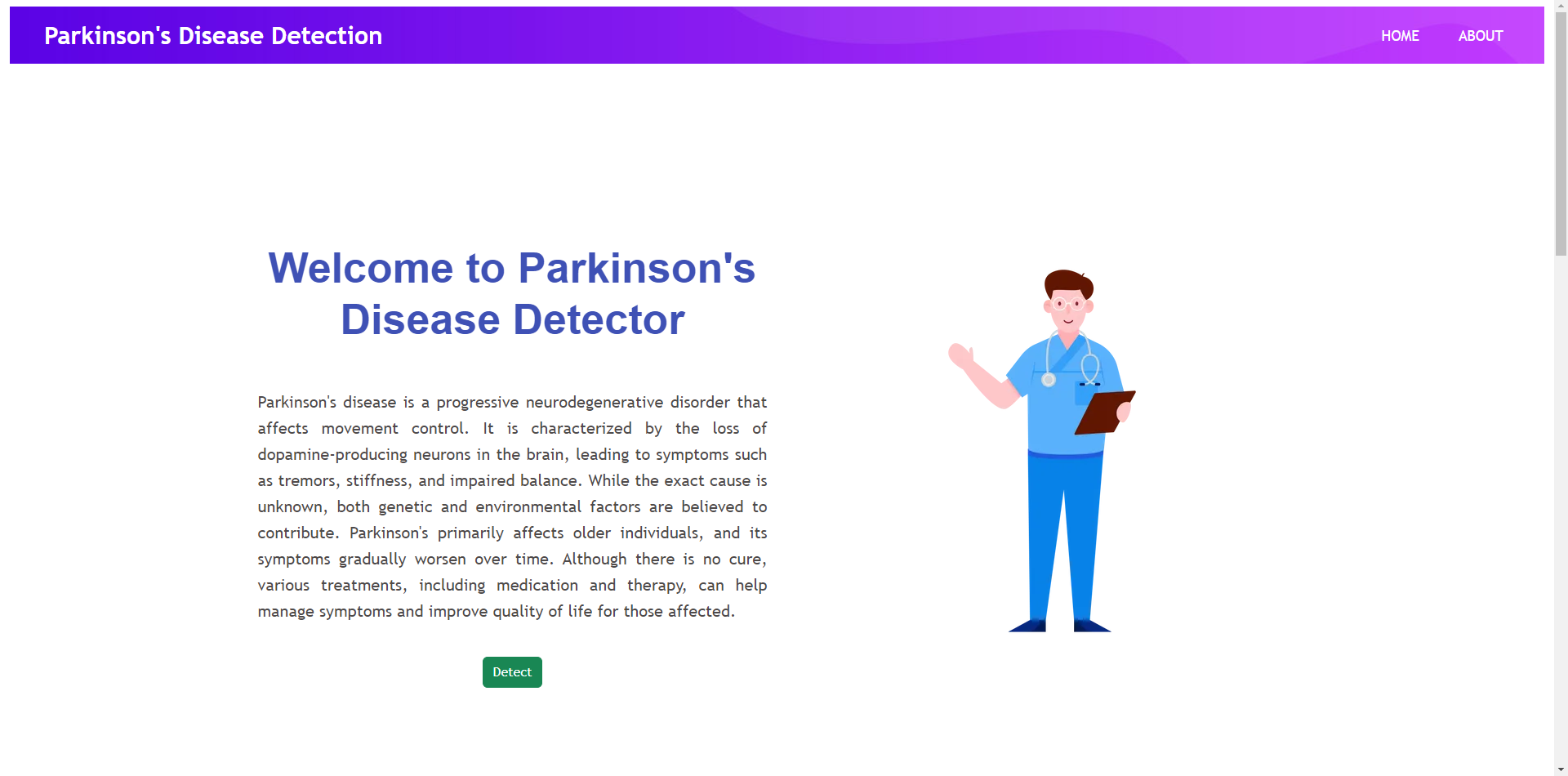
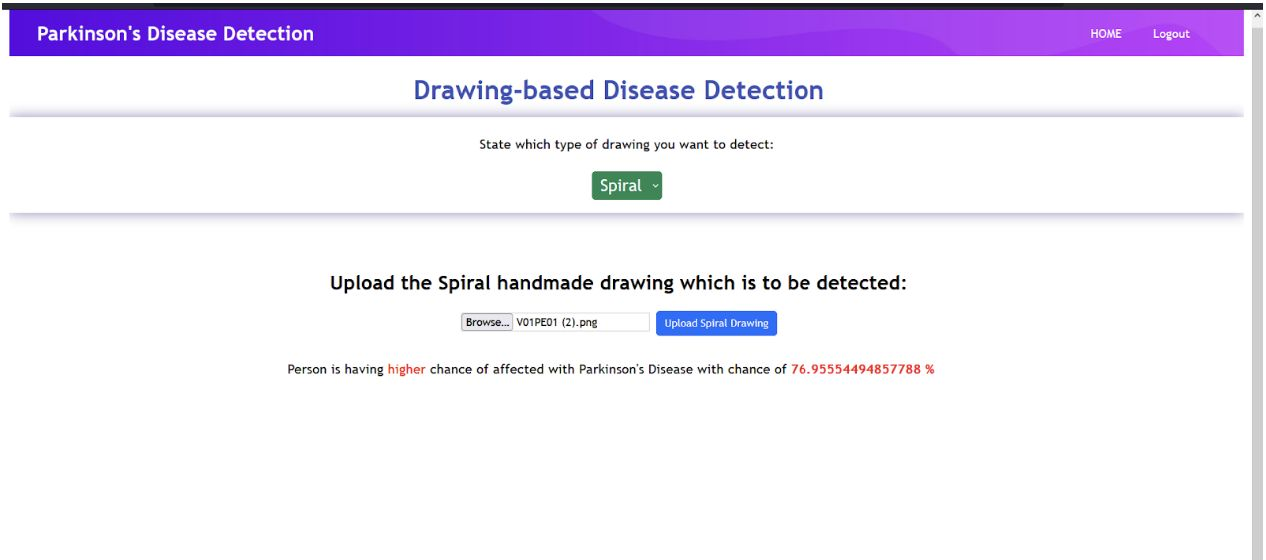
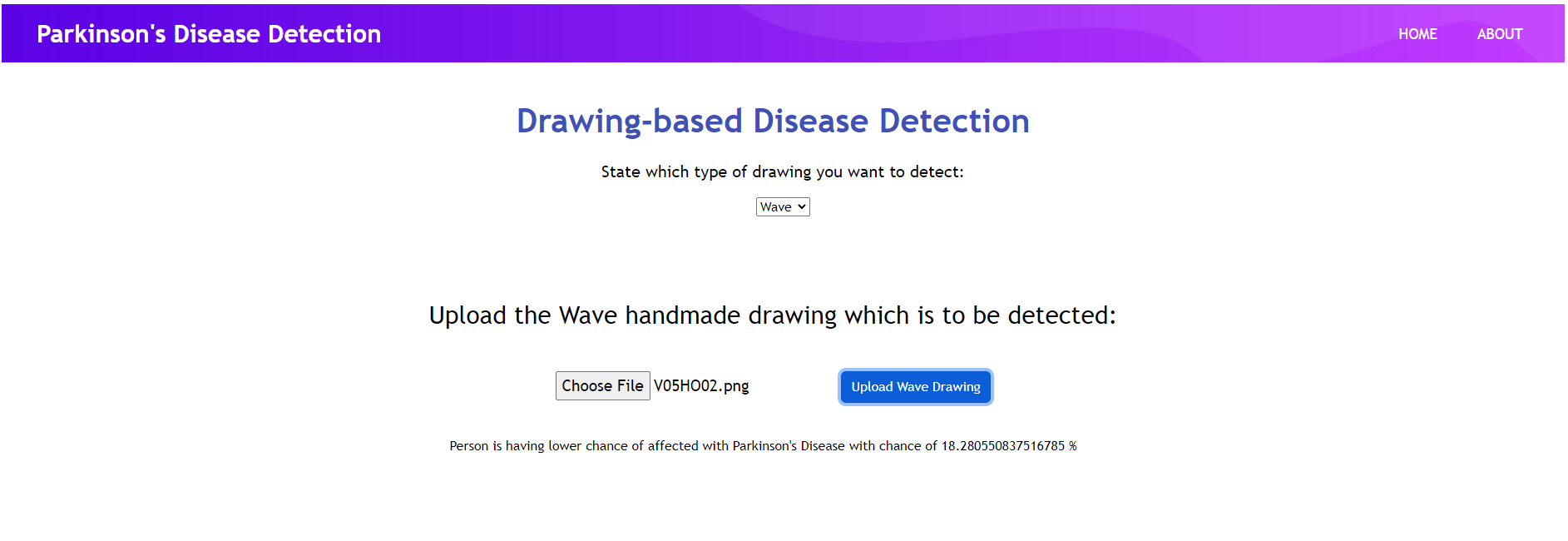
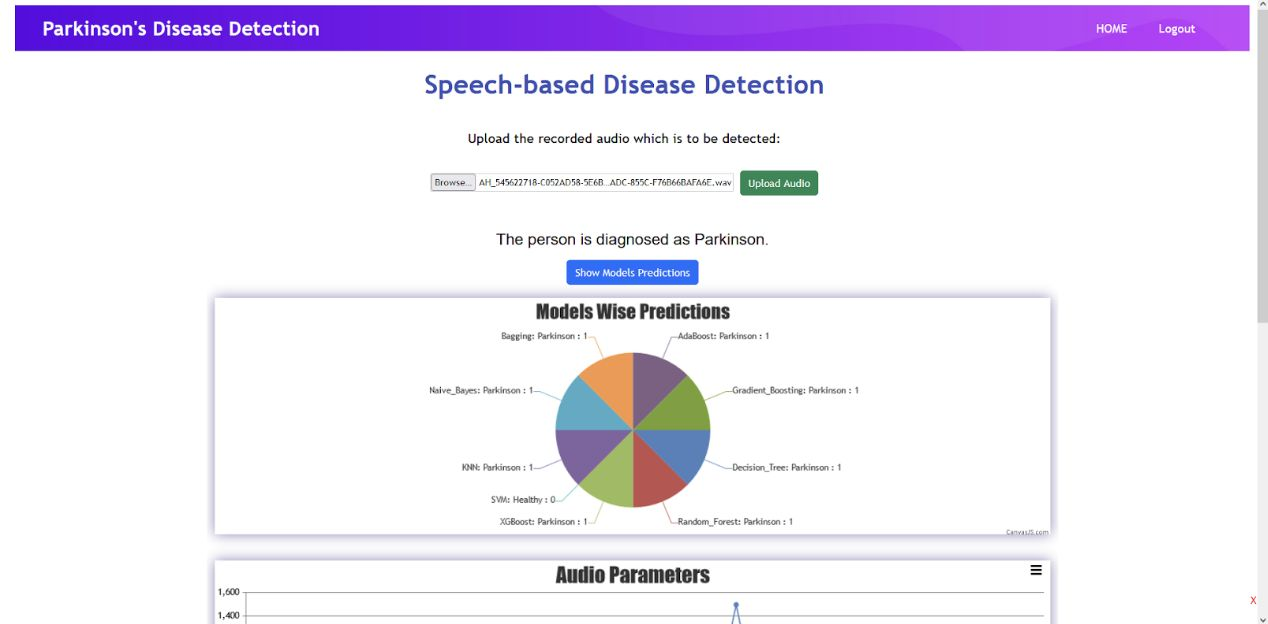
A multimodal machine-learning prototype that analyzes patterns associated with Parkinson's disease from drawing and speech inputs. Two image-based CNN pipelines handle spiral and wave drawings, while an audio-classification pipeline extracts 22 speech features and aggregates predictions from a 9-model ensemble. FastAPI exposes inference services to Angular interfaces for drawing and audio input.
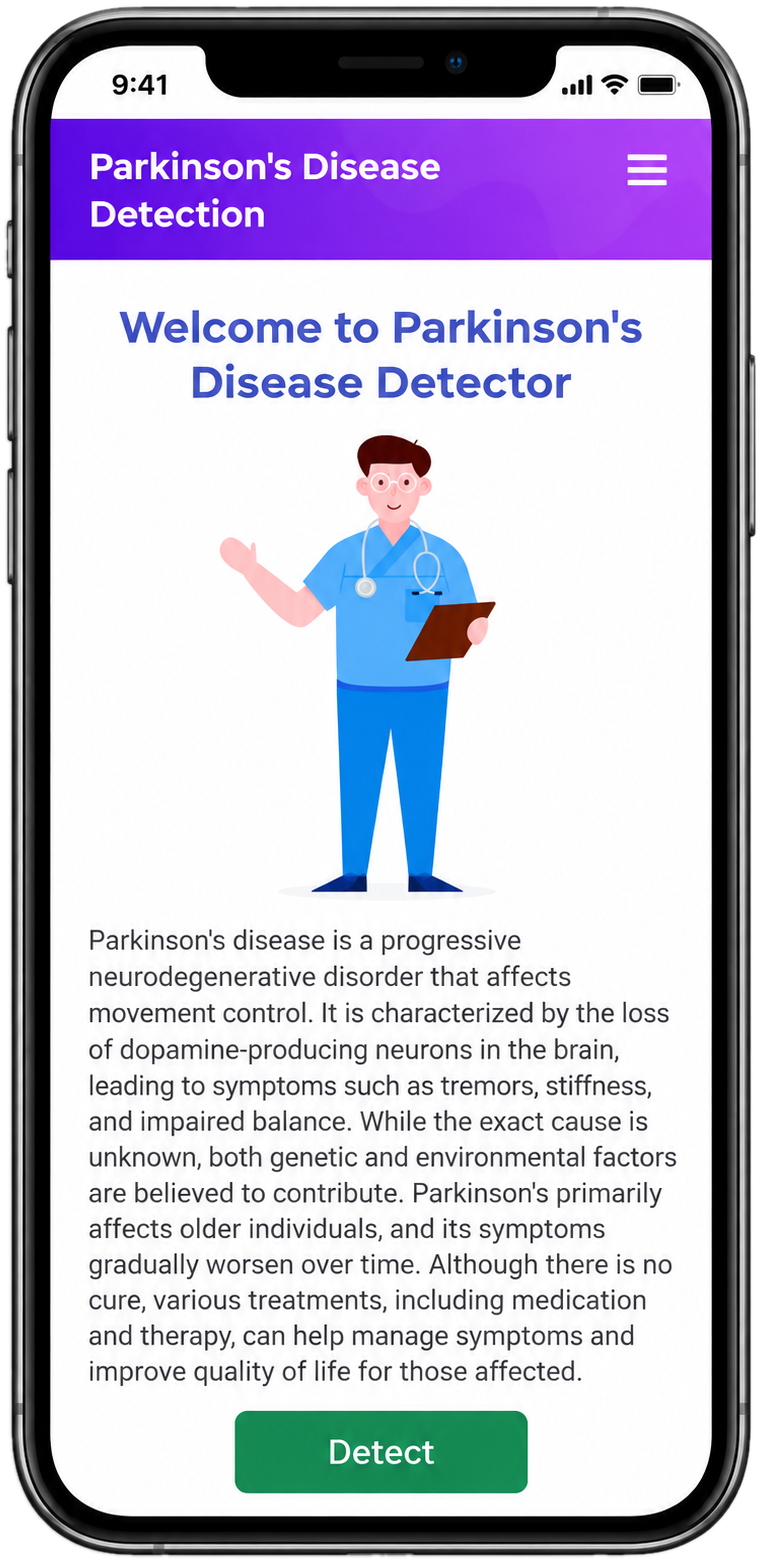
A solo multimodal ML prototype combining two image-based CNN pipelines for spiral and wave drawings with an audio-classification pipeline, built with TensorFlow/Keras, scikit-learn and XGBoost.
The audio path extracts 22 speech features with librosa and aggregates predictions from a 9-model ensemble. FastAPI exposes inference services to Angular interfaces for drawing and audio input, so a user can submit either input type and get a prediction back through the same interface.
This is a research prototype exploring pattern classification from drawing and speech data — it is not a clinical diagnostic system and was not validated for medical use.
Developing and maintaining production web systems for Purdue's Center for Career Opportunities as part of a six-developer team, working across frontend, backend, databases, deployment and production debugging.
Web Developer (Graduate Intern)
Purdue University · Center for Career Opportunities
The CCO maintains production web applications supporting career-service workflows, event administration and public-facing content. The codebase requires ongoing feature development, debugging, modernization and deployment.
Build and maintain full-stack features, investigate production issues independently and improve reliability across CCO Calendar, Outreach, administrative tools and migrated web content.
Date behavior that shifted displayed times by viewer timezone. Built ~12 centralized DST-aware helper functions across ~6–8 files, replacing scattered timezone hacks with consistent handling of PostgreSQL timestamp(6) fields for event creation, editing, querying and calendar display.startsWith('/admin/outreach') that matched both the admin and view-only routes. Fixed by adding optional tool-ID support and exact tool-ID matching so Admin notifications resolve specifically to Admin permission.Next.js · React · TypeScript · Node.js · PostgreSQL · Prisma · Docker · Kubernetes · GitHub Actions · Rancher · Harbor · REST APIs · Web Accessibility · Git
Sole developer of an internal project-performance platform built from a high-level business requirement to replace fragmented spreadsheet-based tracking with centralized workflows, automation and management analytics.
Deployed internally across 8 departments, with 80–100 total production tasks tracked in the system, replacing fragmented spreadsheet workflows with one operational platform.
Software Developer
Yansons Engineering Pvt. Ltd.
Management needed one system to track employees, departments, projects, tasks, dependencies, deadlines, submissions, approvals, performance and reporting — previously spread across spreadsheets.
Translate the operational problem into the architecture, database model, frontend, backend workflows and deployment without a prewritten technical specification.
React · Node.js · Express.js · MySQL · AWS EC2 · AWS Amplify · REST APIs · Full-Stack Development · Git
Worked on transactional-data preprocessing and recommendation-system experimentation using Python and Pandas.
Delivered an evaluated recommendation-system prototype and improved the reliability of the preprocessing/modeling workflow.
Data Scientist Intern
Werardt Systems Pvt. Ltd.
The team needed cleaner transactional data and a working recommendation-system approach to evaluate against the existing workflow.
Preprocess transactional datasets and develop/evaluate recommendation-system experiments under a senior data scientist.
Python · Pandas · Recommendation Systems · Data Preprocessing · Data Analysis
Global Academic Internship Programme in Data Analytics using Deep Learning — 70 hours of coursework and projects across data analytics, machine learning and deep learning.
Completed the program with Grade A and 42/50 on the final project assessment.
Academic Intern — Data Analytics using Deep Learning
National University of Singapore (NUS)
NUS's Global Academic Internship Programme offers an international, project-based introduction to data analytics and deep learning.
Complete 70 hours of coursework and project work applying data analytics, machine learning and deep-learning techniques.
Python · Deep Learning · Machine Learning · Data Analytics
Member of the winning team at IEEE Pune Section's national Eu-Reka engineering event.
Completed the Data Analytics using Deep Learning academic internship in Singapore, earning Grade A and 42/50 on the final project. The programme combined academic work at NUS with AWS-led industry training.
Won 3rd place with Team DataBreach in Digital Defenders at PRAXIS 2023, PCCOE's technical symposium.
Completed IBM's Full Stack Software Developer Professional Certificate covering React, Node.js, cloud-native development, Docker, Kubernetes, microservices and CI/CD.
Graduated from PCCOE with a Bachelor of Technology in Information Technology — First Class with Distinction.
Completed Trainocate's "Practical Data Science with Amazon SageMaker" course, an AWS Partner Advanced Tier Training programme, 22–23 June 2023.
Published "Safety cum Automated Luggage Bag Using Arduino UNO Microcontroller Board" in IJIRSET, Volume 10, Issue 5 (May 2021).